
EPISODE 190
Stay in Your Lane?
Maybe Not.

When is it right to stick to your role—and when do you need to step up and act, even outside your formal job description?
Mike and Jim tackle the age-old advice to “stay in your lane” by exploring what that really means in high-stakes environments. From a cop showing up to a burning house to Marines turning wrenches one moment and picking up rifles the next, we break down how flexibility, judgment, and initiative can make the difference between failure and mission success.
Drawing on real-world examples like the 2012 Taliban attack on Camp Bastion—where Marine pilots and maintainers dropped tools and returned fire—we ask: Is it always someone else’s job, or do high-performing teams blur the lines when the stakes are high?
This episode is about knowing your capabilities, understanding your limits, and recognizing when stepping outside your lane is not only appropriate—but necessary.
Show notes link:
Restricted Data: The History of Nuclear Secrecy in the United States by Alex Wellerstein
Army MDMP (Military Decision Making Process) Lessons and Best Practices Book
USCENTCOM Camp Bastion Investigation
Rochester Business Journal Article
Find us on social media (Facebook/Twitter/Instagram/YouTube) @TacTangents. You can join the conversation in our Facebook Discussion Group.
Find all of our episodes, articles, some reading list ideas, and more on our website www.tacticaltangents.com
Like what we’re doing? Head over to Patreon and give us a buck for each new episode. You can also make a one-time contribution at GoFundMe.
Intro music credit Bensound.com
CLICK BELOW TO SUBSCRIBE NOW ON YOUR FAVORITE PLAYER






THANK YOU TO OUR SPONSORS! PLEASE GO CHECK THEM OUT




Recent Episodes

Who even are you? And why I don’t carry as often as I once did.
Mike breaks down why developing a broader, more balanced identity is not just a personal issue, but a professional one. From off-duty mindset to long-term career sustainability, this episode challenges officers to build self-awareness, detach ego from the role, and cultivate purpose beyond the job. Because at some point—whether by promotion, retirement, or circumstance—you won’t be “the cop” anymore, and what’s left needs to be enough.
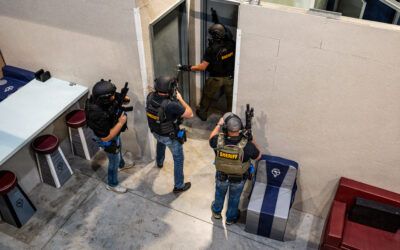
The best way to clear a house—CQB for Operators and Noobs
This episode explores the tradeoffs behind how we clear structures, why context matters, and what actually improves survivability when everything is working against you.